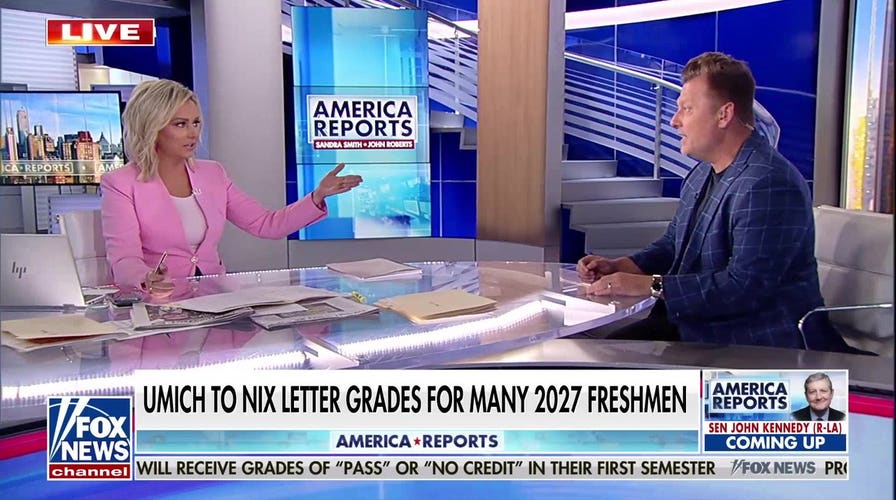
The University of Michigan is implementing a new policy aimed at reducing stress and anxiety among its incoming freshmen students by shielding their first-semester letter grades from transcripts.
Starting in fall 2027, students enrolled in the College of Literature, Science, and the Arts (LSA) will have their first-semester grades designated as pass or no credit on their transcripts. This means that while students will still receive their letter grades throughout the semester, they will not be factored into their overall grade point average.
The university's goal is to give first-year students more freedom to explore academically without fear of a low grade having long-term consequences. According to officials, this policy will allow students to take courses in new fields or explore subjects that may not come easily to them without worrying about the impact on their transcript.
Transcripts for LSA students will instead show a "P" for pass or "NC" for no credit, and university officials will keep first-semester letter grades internally for administrative purposes. The policy only applies to incoming freshmen enrolled in the LSA and there is no opt-out option.
The University of Michigan is not alone in implementing such a policy, with several other schools including Massachusetts Institute of Technology, Swarthmore College, and the California Institute of Technology also adopting similar policies.
However, some experts have expressed concerns that shielding students from bad grades could do more harm than good. Psychotherapist Jonathan Alpert believes that this approach can create a culture where discomfort is seen as a mental health emergency, rather than a normal part of the learning process.
NTC Report coverage is based on reporting from the original publisher.
View original reporting →