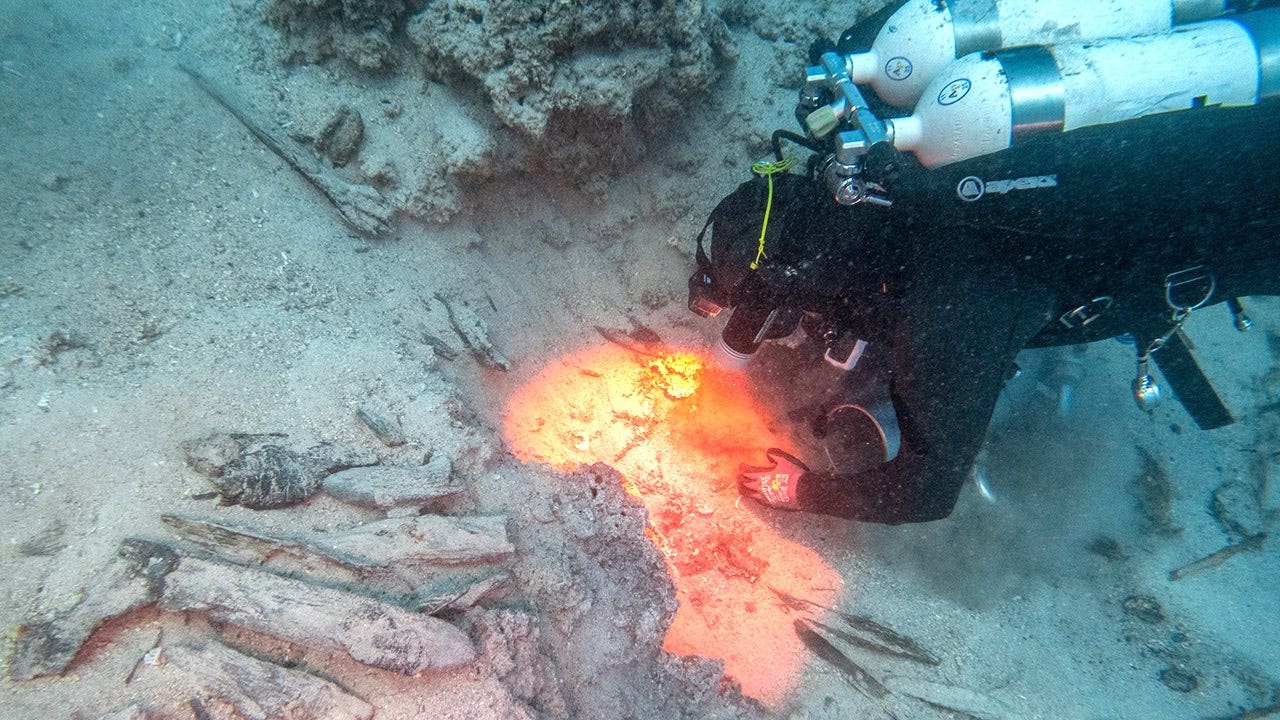
Archaeologists examining an ancient shipwreck have revealed a significant trove of gold, which they believe may have belonged to a wealthy and powerful passenger who traveled on the vessel over 1,300 years ago.
The ship, which dates back to the late seventh or early eighth century AD, was discovered near the Croatian island of Mljet more than a decade ago. Systematic underwater excavations of the site have been underway since 2015, with the findings formally presented by the Croatian Conservation Institute this summer.
According to officials, the ship contained a dazzling collection of jewelry, including an elaborate piece studded with pearls and a green gemstone, as well as buckles decorated with rubies, emeralds, and pearls. A golden signet ring was also found, which experts believe would have been worn by someone of considerable status.
The wreck also yielded gold coins issued by four emperors of the Heraclian dynasty, which ruled the Byzantine Empire during the seventh and eighth centuries. The total amount of gold recovered from the shipwreck is estimated to be over 1.3 pounds, representing the largest amount ever found on a shipwreck in the Mediterranean.
Experts believe that the Mljet wreck is a critical site for understanding the transformation of the late Roman Empire into the medieval world, and how the Mediterranean was affected by its sea routes. The Byzantine Empire itself lasted until 1453 and once controlled vast stretches of the eastern Mediterranean.
NTC Report coverage is based on reporting from the original publisher.
View original reporting →