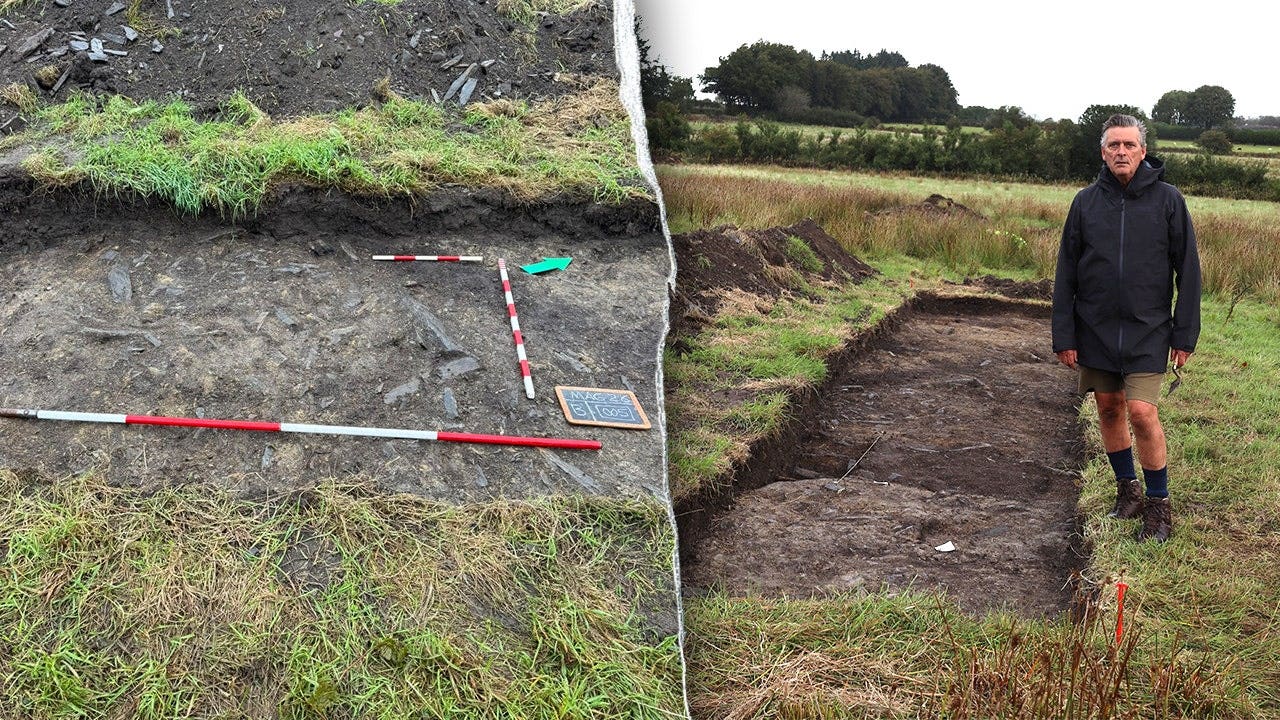
An ancient Roman fort discovered in a remote area of Wales has been identified as a potential site of significant historical importance. The fort, located near Frenni Fawr in Pembrokeshire, was the subject of an announcement by Wolfson College, Oxford, following recent excavations at the site. Mark Merrony, a fellow at Wolfson College, Oxford, and editor-in-chief of Antiqvvs, an archaeology magazine, first identified the fort using satellite imagery in 2024.
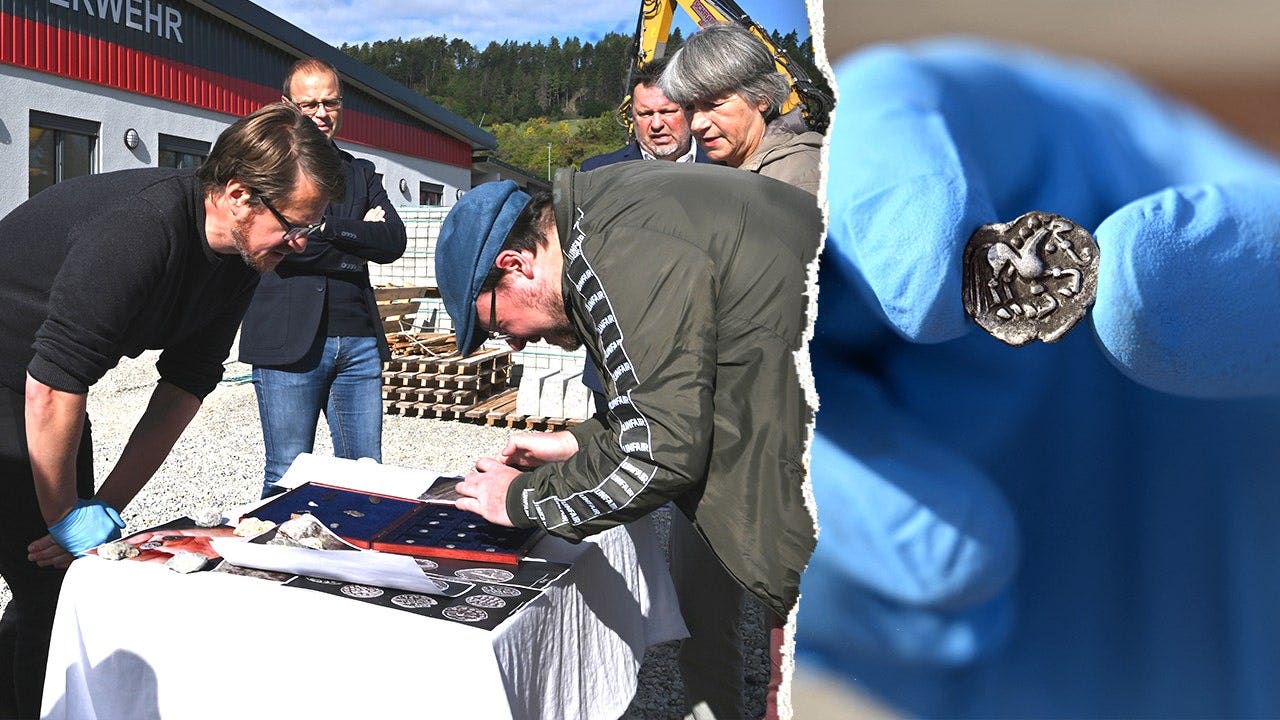
Recent excavations at the site have uncovered two Roman coins from the late 4th century, suggesting that activity at the site may have continued into the period when Emperor Magnus Maximus ruled Britain from 383 to 388 A.D. Merrony estimates that the fort could have accommodated as many as 1,000 auxiliary Roman soldiers, significantly more than he initially estimated.
The discovery of Roman artifacts, including ceramic roofing tiles and possible floor tiles or underfloor heating materials, has provided valuable insights into the fort's history. Merrony believes that the fort itself is more significant than the coins, as it is likely to have been founded in the 1st century. The possible connection to Maximus stems from the Mabinogion, a medieval collection of Welsh tales and legends that also features King Arthur.
Merrony's discovery has sparked interest in the possibility that the Mabinogion's account of a Roman emperor establishing a military camp near Frenni Fawr may be based on historical fact. While the discovery does not establish that Maximus visited the fort, Merrony believes that the legend may preserve the memory of an actual historical event. Further archaeological investigation is needed to confirm the site's significance and to explore the possible Roman road and aqueduct that may be associated with the fort.
NTC Report coverage is based on reporting from the original publisher.
View original reporting →